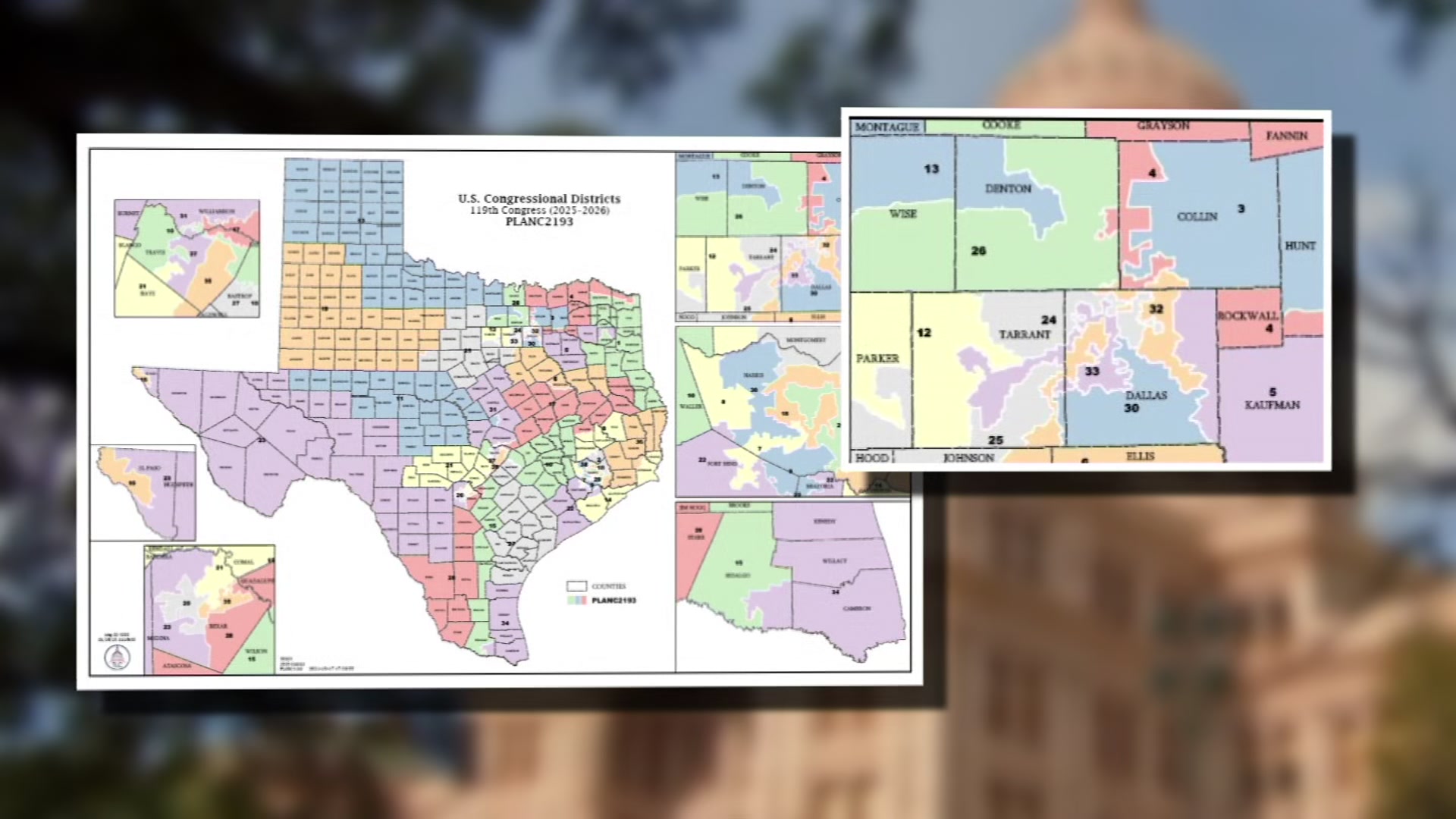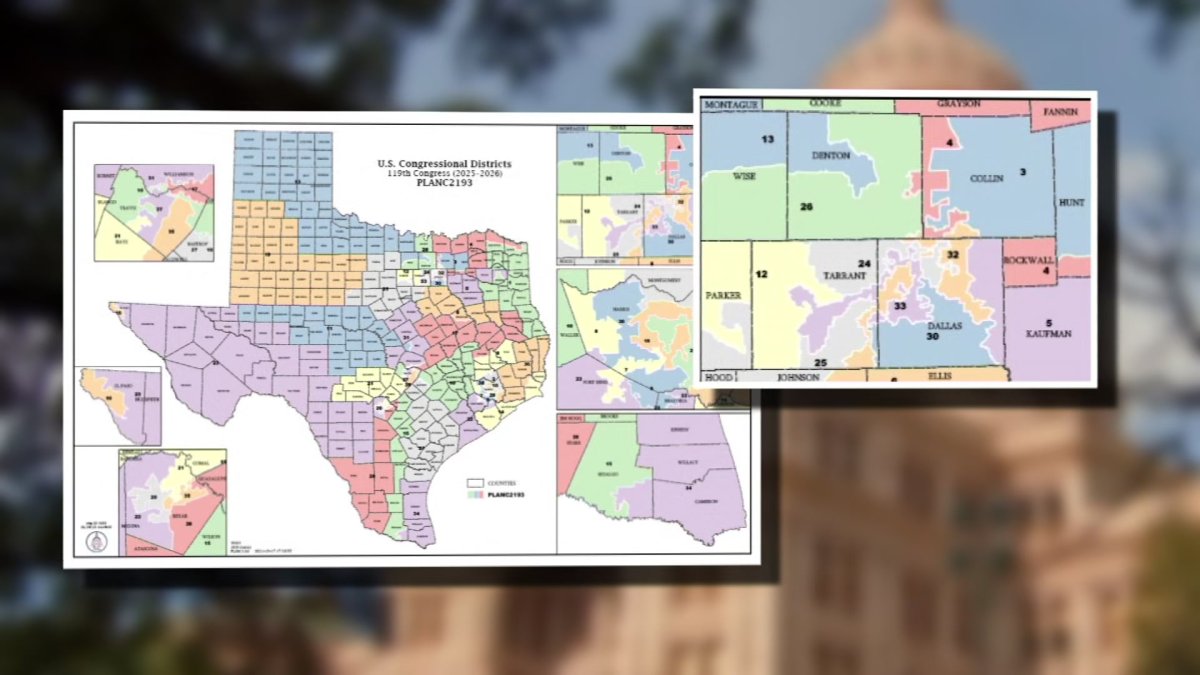
Texas cannot use a new congressional map drawn by Republicans in hopes of securing the party additional U.S. House seats, a panel of three federal judges ruled Tuesday.
The ruling was a blow to President Donald Trump’s efforts to have GOP lawmakers in multiple states redraw their maps to help the party preserve its slim House majority in the potentially difficult 2026 midterm elections.
“The public perception of this case is that it’s about politics. To be sure, politics played a role in drawing the 2025 Map. But it was much more than just politics. Substantial evidence shows that Texas racially gerrymandered the 2025 Map,” the ruling states.
Texas Attorney General Ken Paxton said he plans to appeal and that the maps are legal.
“The radical left is once again trying to undermine the will of the people. The Big Beautiful Map was entirely legal and passed for partisan purposes to better represent the political affiliations of Texas,” said Paxton. “I will be appealing this decision to the Supreme Court of the United States, and I fully expect the court to uphold Texas’s sovereign right to engage in partisan redistricting.”
Texas this summer was the first state to meet Trump’s demands in what has become an expanding national battle over redistricting. Republicans drew the state’s new map to give the GOP five additional seats, and Missouri and North Carolina followed with new maps adding an additional Republican seat each. To counter those moves, California voters approved a ballot initiative to give Democrats an additional five seats there.
The 2-1 decision followed a nearly two-week trial in El Paso, Texas. Texas’ expected appeal would be directly to the U.S. Supreme Court, under a federal law dealing with redistricting lawsuits.
A coalition of civil rights groups representing Black and Hispanic voters argued the map reduced the influence of minority voters, making it a racial gerrymander that violates the federal Voting Rights Act and the U.S. Constitution.
A panel of federal judges has ruled that Texas’s newly drawn congressional maps cannot be used in the 2026 election, citing racial gerrymandering. Texas Republicans plan to appeal the decision to the U.S. Supreme Court, setting up a high-stakes legal battle. NBC 5’s Keenan Willard has the latest.
They sought an order blocking Texas from using the map while their case proceeded, which would force the state to use the map drawn by the GOP-controlled Legislature in 2021 for next year’s elections.
The panel of judges granted the critics’ request, signaling that they think those critics have a substantial chance of winning their case at trial. Judges appointed by Trump and Democratic President Barack Obama formed the majority. An appointee of Republican President Ronald Reagan dissented.
2024 presidential election results in Dallas-Fort Worth area legislative districts
According to analyses performed by the Texas Legislative Council. Zoom out to see other areas in Texas
Old legislative districts
New legislative districts
Has your district changed?
See whether your congressional district has changed since the state senate passed the new congressional map.
Republicans in Texas said repeatedly during the Legislature’s debates this summer, and after, that they were redrawing districts solely to help Republicans win more seats. The U.S. Supreme Court gave states the go-ahead to pursue partisan gerrymandering by ruling in 2019 that it’s a political issue beyond the reach of the federal courts.
Republicans hold 25 of Texas’ 38 congressional seats, with Democrats holding two of their 13 seats in districts that Trump carried in 2024. Had the new map been in place last year, Trump would have carried 30 congressional districts by 10 percentage points or more, making it likely that the GOP would have won that many seats as well.
Democrats across the U.S. have described the redistricting in Texas and other states as a power grab by Trump designed to prevent a congressional check on him, regardless of voter anger. Republicans are keen to avoid a repeat of the 2018 midterms, when they lost the majority and the Democratic-controlled House twice impeached Trump.
The new map decreased from 16 to 14 the number of congressional districts where minorities comprise a majority of voting-age citizens.
In doing so, they eliminated what had been five of nine “coalition” districts, where no racial or ethnic minority has a majority but together minorities outnumber non-Hispanic whites in the voting-age population. Five of six Democratic lawmakers drawn into districts with other incumbents are Black or Hispanic.
Yet Republicans argued that the map is better for minority voters. While five “coalition” districts are eliminated, there’s a new, eighth Hispanic-majority district, and two new Black-majority districts.
Critics consider each of those new districts a sham, arguing that the majority is so slim that white voters, who tend to turn out in larger numbers, will control election results.